Leon Barral and the Concrete Engineer

Joe Gilmour Uncategorized

Leon Barral: “I met one person who changed everything for me. His name was Pierre Martin. He came into my cellar, about 25 years ago, and when he tasted the wine, he could tell immediately if the wine was artificially yeasted, if it had sulphur added, the maturity in degrees of alcohol — everything. Because me, at the beginning, I didn’t know if the wine had sulphur added. Now, I know. It was his visit that changed everything for me.”

“Who the hell was this guy?! Was this guy a winemaker? “No! He was a concrete engineer! He was a passionate lover of classical music as well, and painting. And his fantasy was to be locked in a cellar in the Loire with his wife, and to die while drinking Philippe Foreau’s Goutte d’Or”

Full article at Gargantuan Wine – Well worth 10 mins.

concrete 2


Joe GilmourLeon Barral and the Concrete Engineer

6 Portland Road

Joe Gilmour Uncategorized

Kensington is lovely, of course it is. But it is also very boring. So is Notting Hill, if a little less so, and at least they get the occasional excitement of piss-filled cans of Red-Stripe being thrown around every year at the carnival. The area has suffered in recent years.

Residentially, it is too expensive for the young creative set who used to hang out in Chelsea and Notting Hill and who now locate themselves in the East. Culturally, it houses some grand institutions  but the vibrant new openings have long since dried up.

Restaurant wise, there are some good high-endish classic destinations, Kitchen W8, Launceston Place, Sally Clarks etc, but vibrant new-openings, not so much.

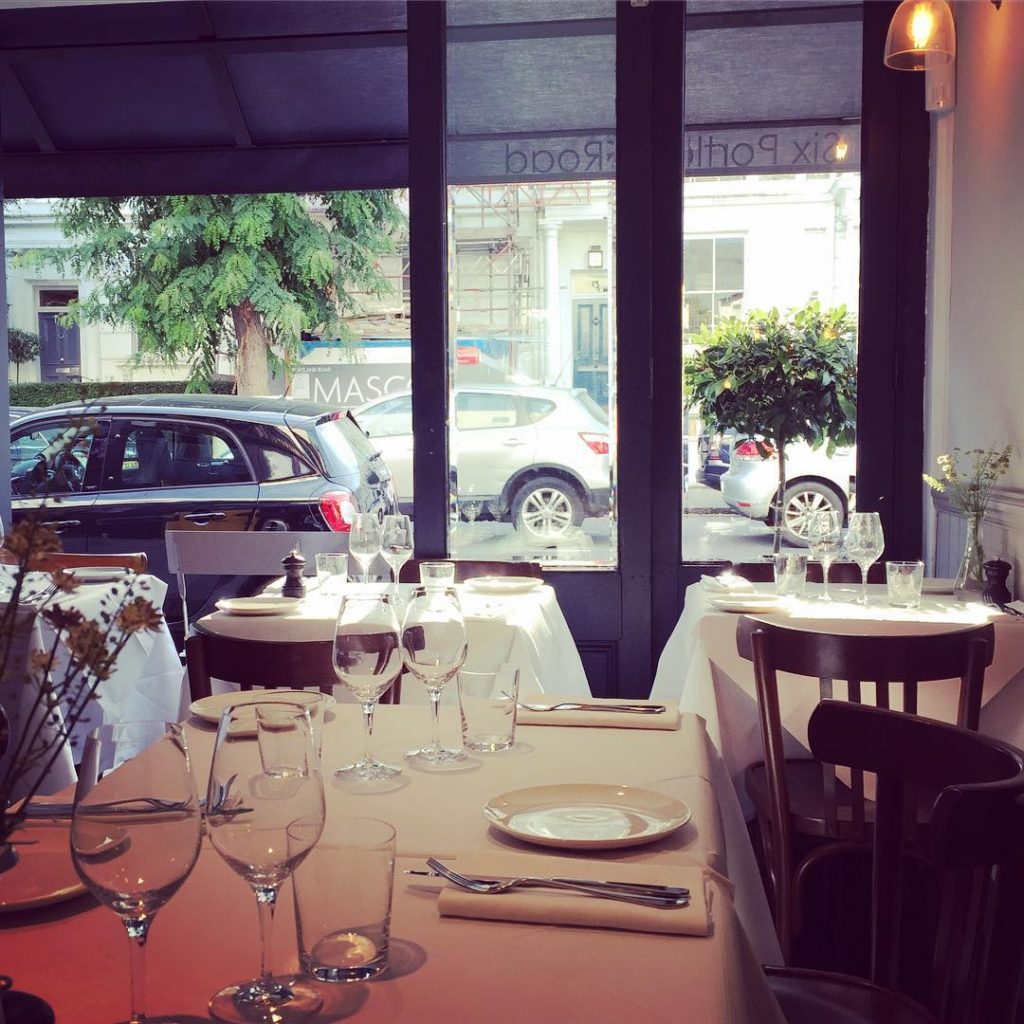
So, it is not surprising that 6 Portland Road was so popular when we went for dinner a few days ago.
The lovely owner Oli Barker, has lured Pascal Wiedermann, and it seems most of the wine-list from the excellent Terroirs group, who are part-owned by Les Caves de Pyrene.

So, no problem with the food. These guys know what they’re doing in the kitchen. Outside, the rusticity has been dialled down a bit and has a sort of effortlessly chic modern-French feel to it.

A slightly unappealing, herby amuse-bouche sort of dip was replaced by some ultra-fresh Sardines and one of the best terrines I’ve had for a long time.

The mains were good. Pork cheek was suitably hearty and I can’t remember what my companion had, but it was nice. Prices aren’t cheap but, well, neither are the locals.

Speaking of locals, it was interesting to eavesdrop on some of the fall-out from a quite hard-line natural wine list. We were the lucky recipients of a bottle that some guys next to us didn’t like (and was great) and it’s probably not easy getting punters to get their wallets out when they hadn’t heard of any of the wines.

Personally, I think it’s a mistake to source so many wines of a similar bent. It just becomes a bit boring seeing the same stuff everywhere. It’s like in Paris, everywhere you go it’s the same stuff: Foillard, Ganevat, de Moor etc etc. Maybe not the Gallo, but a bit of interesting Burgundy, Rhone and Bordeaux wouldn’t go amiss amongst the Pineau d’Aunis.

I was quite excited to see a white from Jean-Marie Berrux, who I knew better from the Sarnin-Berrux operation I visited in St-Aubin a few years ago. They were making really lovely natural-inflected whites in Burgundy, up to some pretty exalted appellations. Didn’t end up importing any as we were not sure the UK market was 100% ready for them and also there was a bit of a question mark in our minds about how the superior appellations always related to quality. It seemed they wore their vinificaition signature ahead of their terroir profiles.

Anyway – Jean Marie is making a sideline with negoce grapes and we tried his Tetu 2013 (I think it was 2013)

It was lovely, not quite the Puligny our nice waitress compared it too, but top stuff and very bracing.

It reminded me of the Cuvee Florine from Ganevat. Aaron Ayscough put’s it well when he says: “Belying its name, which means “little stubborn one,” it’s dance-in-the-streets delicious right this instant. There’s a sea-spray, sea-shelly salinity, and a kind of delicate lime-zest filigree that just slays me.”

Whether our fellow diners, the tieless masters of finance, will be dancing in the streets with joy, I don’t know. But to have a restaurant as good as this in the neighbourhood, a jig at the very least would be appropriate.


Joe Gilmour6 Portland Road

Lafite Who?

Joe Gilmour Uncategorized

Scene: Natural wine bar, brick walls. wax capsules. etc After a long discussion about wine from Jura.

Me: “It’s great, it reminds me of Michel Lafarge”

Him: “Who?”

Me: “Michel Lafarge, you know, top producer of Volnay?”

Him: “Never heard of ‘im”

I can’t remember who it was, I think it might have been Gianfranco Soldera, reminiscing a few months back about his vinous education. He was remembering the great wines that became the key reference points for his memory bank of what wine was capable of aspiring to. Mouton 1949, Armand Rousseau 1985, etc, etc. He wanted to make wines as good as these. I think he probably succeeded.

Gianfranco bemoaned the current generation of drinkers and winemakers who haven’t had the chance to taste the classics because they’re just too expensive. Indeed, a few years ago, I was at a tasting of 1982 Bordeaux chatting to an MW, who’d never tasted a wine from this epoch-changing vintage.

Understand prices, and you can understand a lot of what’s happening in the world. Was the surge of great restaurants in London about a new discovery of interest in food, or was it driven as much by high prices of rental property pushing people to eat out because they didn’t have a dining table at home?

Overnoy, L’Anglore, Foillard etc. If you have the connections and can find them, you can drink the best natural wines in the world without spending a fortune. The popularity of these ‘new classics’ is in part a natural reaction to the increasing unattainability of the ‘old-classics’.

But, because of this, it seems there’s a generation of young wine lovers, who don’t aspire to drink the classics anymore. I think that’s a shame. When I started, it was all I wanted to do, to encounter Lafite, Petrus et al. To bag some of the ‘big-game’ of the wine world. I don’t feel like that so much anymore, but it was an important period of my life that allowed me a sense of scale as to what wine, and older wine in particular was all about.

And, it’s not like all of the classic wines of France are out of reach. Their is a plethora of well-priced, delicious Bordeaux out there that deserves more exposure on the capitals trendy new lists. The importers Vine-Trail deserve a lot of credit for pushing these wines at the moment.

So, in the rush to celebrate the new, the trendy, let’s not forget the classics. To comprehend the new it helps to understand the past.


Joe GilmourLafite Who?

Chez Guy

Joe Gilmour Uncategorized

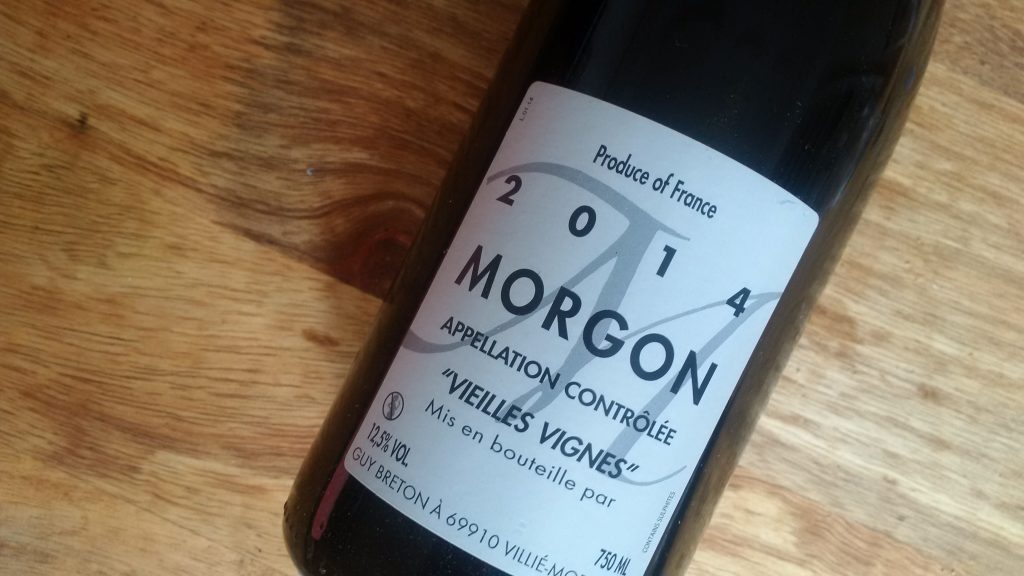
Of all of the Gang of Four, Guy Breton is the least well known in the UK. Jean Foillard and Marcel Lapierre have their wines listed the breadth of the country. Jean-Paul Thevenet is a bit less well-known.  This is a product of size, Guy’s domaine is a fraction of the size of Lapierre and Foillard. Today, Foillard and Lapierre have increased to around 30 hectares, Guy’s has stayed small, only about 4 hectares in total.

The output of Breton and JP Thevenet is about the same (2,000 – 3,000 cases).  Although stylistically different, it’s difficult to differentiate the quality of the Morgons of all four. They are all impeccable. Guy’s is a typically elegant expression, natural and pure but with perhaps a spice component somewhat similar to Alan Coudert at Clos de la Roilette.

He strives for balance without weight, without the dominance of wood, so he buys used barrels from Domaine de la Romanée-Conti. Subsequently, his wines his are typically the lightest in colour, the lowest in alcohol, and the least tannic.

One of my favourite writers on anything (and Beaujolais in particular) Aaron Ayscough, says: “Guy Breton’s 2008 “P’tit Max” Morgon is a wine one doesn’t see anywhere near as often as one should on Paris wine lists. Presumably this is in accordance with Breton’s wishes, whatever they may be. Leap on it where you see it though: this is an absolutely magisterial Morgon, perhaps my favorite among a favoured appellation”

So, even in France they’re hard to pick-up. Most is whisked off to the US and Japan. I know the team at Kermit Lynch can be very effective at managing to extract large volumes from producers there. Jean-Paul Thevenet once described how they visit, pull their laptops out and work out immediately how much to take. It’s usually a very large number!

Joe GilmourChez Guy

Ceritas

Joe Gilmour Uncategorized

The ‘In Pursuit of Balance’ movement started by Raj Parr, Jasmin Hirsch and others declared recently that they were ceasing operations. Parr feels it’s gone as far I could: “It did what it did, open a dialogue. We don’t want to make it into a sales and market campaign. It never was that. A discussion has been started. We’ll see where it goes.”

Like all oppositional movements in wine, whether notional or not, it drew its fair share of controversy. It did however, draw attention to some superb food-friendly wine styles that really shone in the spot-light the movement provided.

Now, the best cool-climate styles in California take their place as some of the best wines in California full-stop. There is a recognition there that perhaps didn’t seem possible when they started. Were they a symptom or a cause? It’s difficult to say. There were certainly plenty of other influential voices. Equally, outside California, there was also a sense of rediscovery of traditional and native styles. Wineries like Lopez de Heredia were being re-discovered by a new generation seeking a change from the big and modern wines that were so so popular.

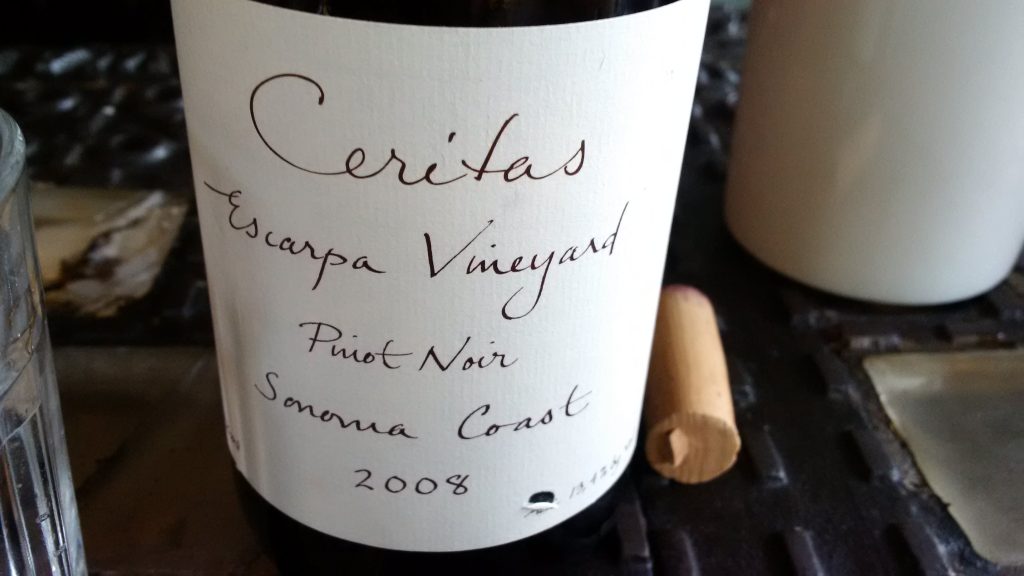
When I was in California last year asking Somms about the wine I should try, most of them mentioned Ceritas, a project started by John Raytek and his partner Phoebe Bass.

They source grapes from a variety of sites on the Sonoma Coast and the Santa Cruz mountains and look for cool-climate sites that can yield ripe fruit with elegant tannins and pure fruit.

Stylistically, they have much in common with the Grand Cru Chablis of Dauvissat and a softer version of the Volnay’s of Michel Lafarge

Their wines are only sold via a mailing list in the State’s and restaurant’s do all they can to get a case or two. Sam Bogue, wine director for the Ne Timeas Restaurant Group, which includes Flour + Water, Aatxe and Central Kitchen says: “We take all they allocate to us, and we’ll take anyone else’s allocation who doesn’t want it.”

There is certainly a lineage in these wines that you can trace through Arnot-Roberts, where Raytek used to work. A producer that still hugely excites me, ever since trying his pale coloured Trousseau when we pulled a bottle off t he first palate into the UK. I think John Raytek’s wines are every bit as exciting. So, it’s hugely exciting to be able to bring these wines into the country.

I’ve a lot of respect for what IPOB has done, and I think it reflects a lot of what winemakers just wanted to do. It was a natural re-adjustment to a period dominated by a lot of big (but not always unbalanced wines) When I visited Copain, Wells Gutherie said “You know, I would go into my cellar and just not want to drink any of the wines I made during that era”.

What ‘Balance’ is, and what constitutes ‘Natural’ is continually up for debate, and the wheel will constantly be spinning. I just hope the debate is done with a smile and a glass in hand. One style does not invalidate another, and as much as IPOB was about promoting a certain style of wines, most of the proponants would happily sing the virtues of ‘big’ wines like Chateauneuf, Port, Amarone and Priorat.

Joe GilmourCeritas

Snaps from the Northern Rhone

Joe Gilmour Uncategorized

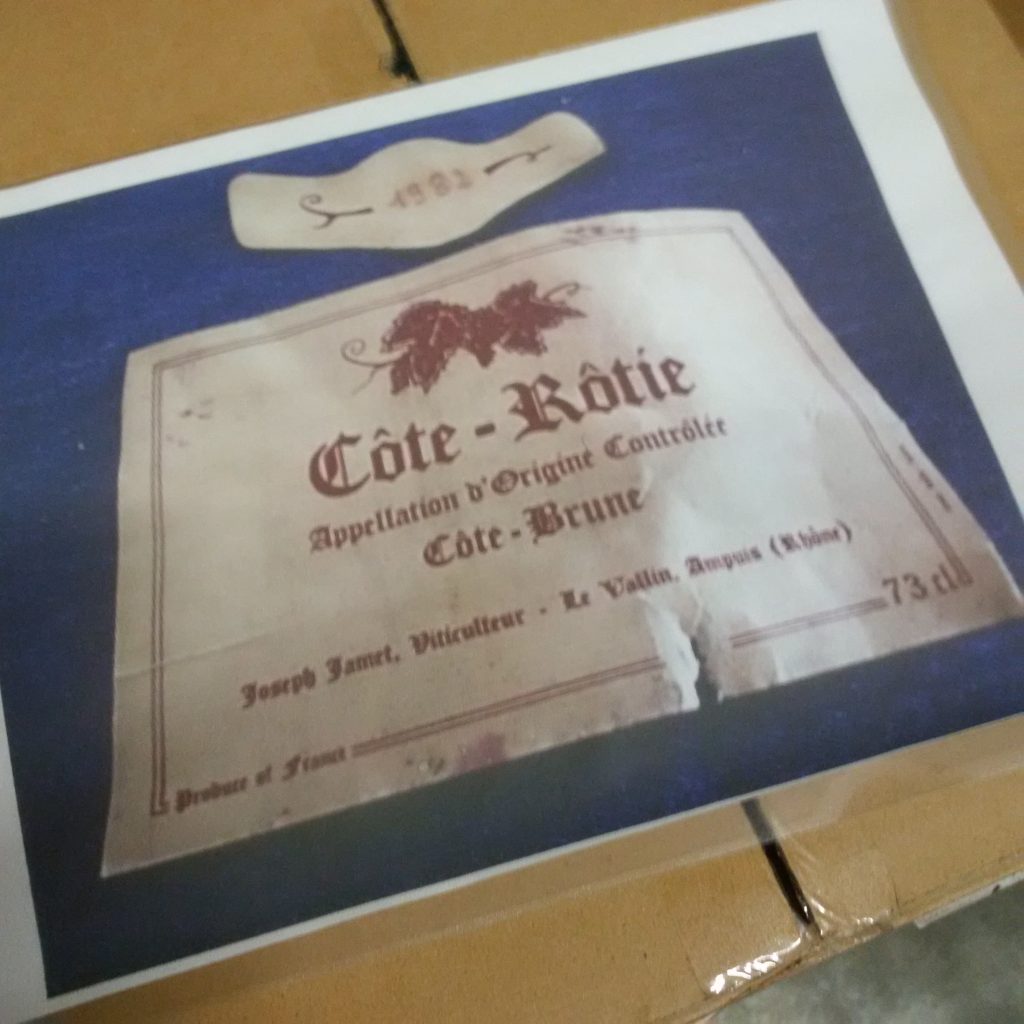
The old Joseph Jamet label, from the early 1980s. Note the 73cl bottle! They changed it in the mid 1980s. Jean-Luc said the paper basically disintegrated within a few years in a damp cellar. In the early days of their rare Cote-Brune bottling they would just mix a bottle in with a case of the original.

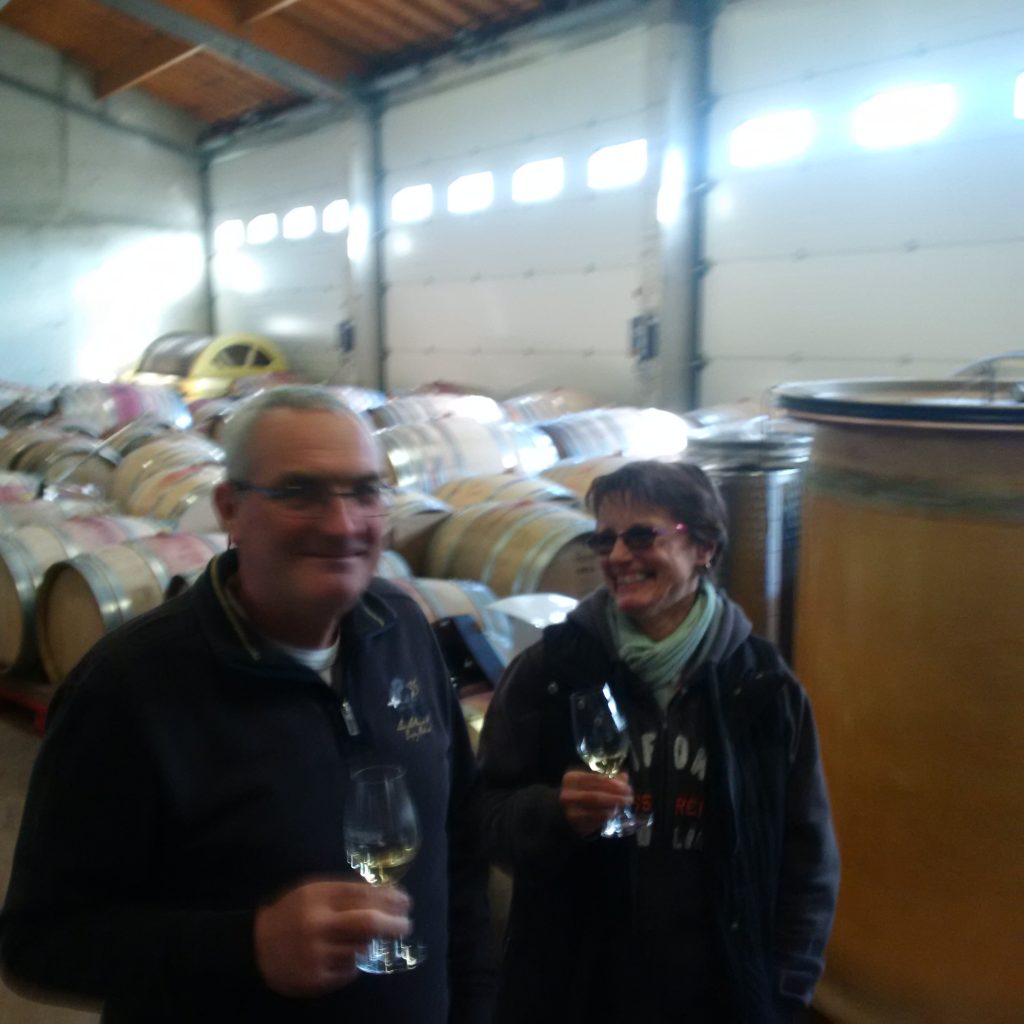
The new barrel room of Jean-Luc and Evelyne Jamet.

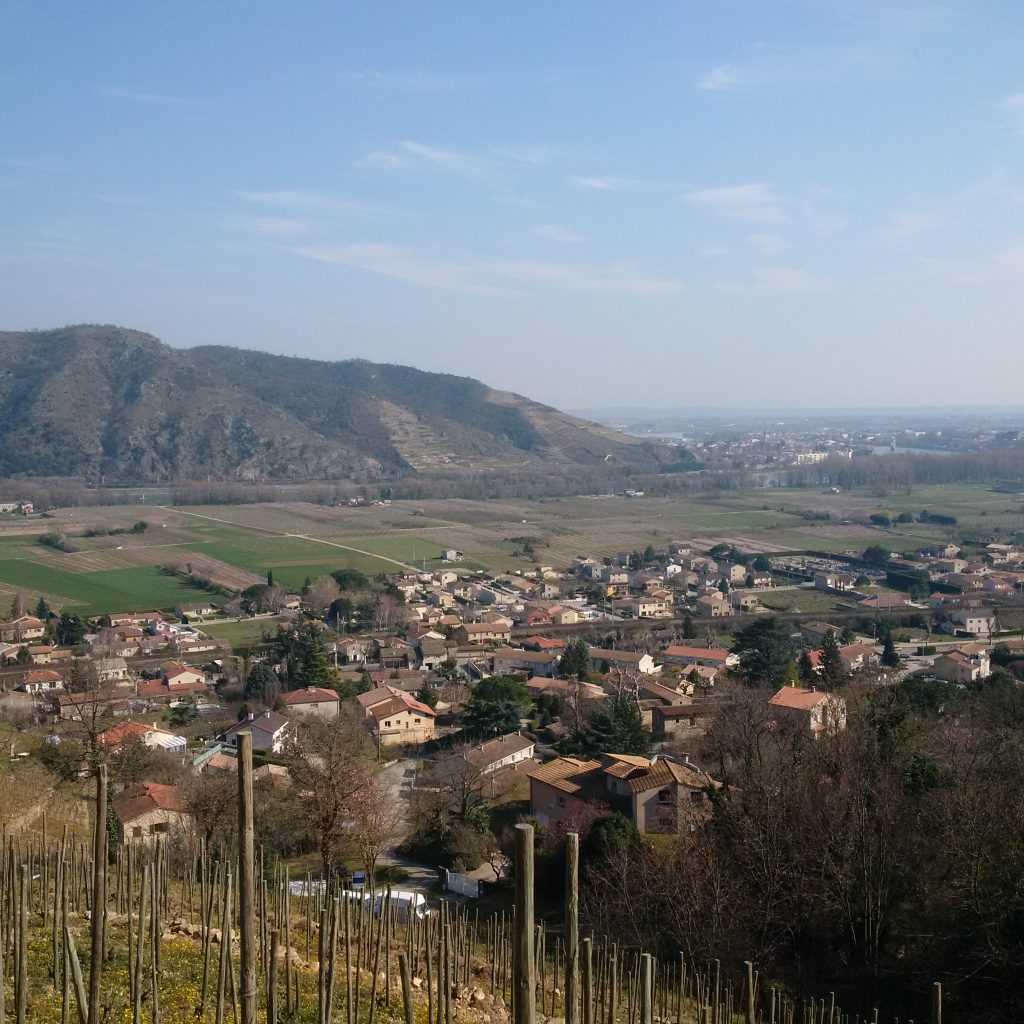
On top of hill at St-Joseph looking out over the river towards Crozes. The vineyard on as the hill turns is Chapoutiers Varonnieres.

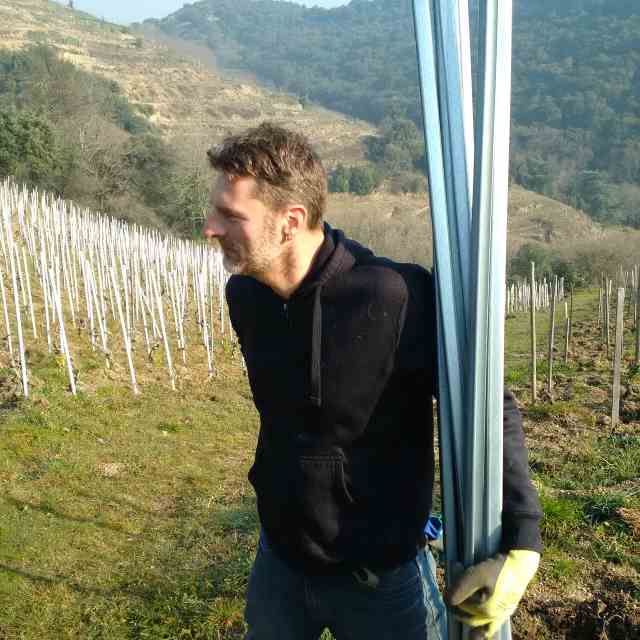
Ludovic planting new metal staves in his Chaillot vineyard inherited from the Pierre Lionnet estate.

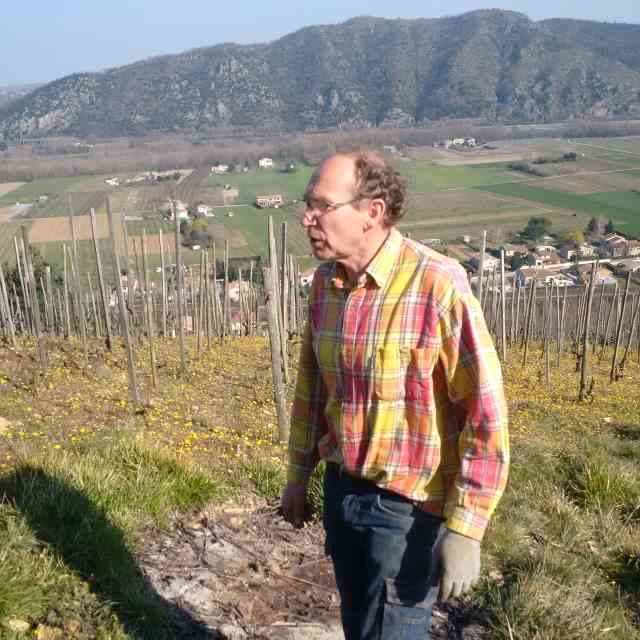
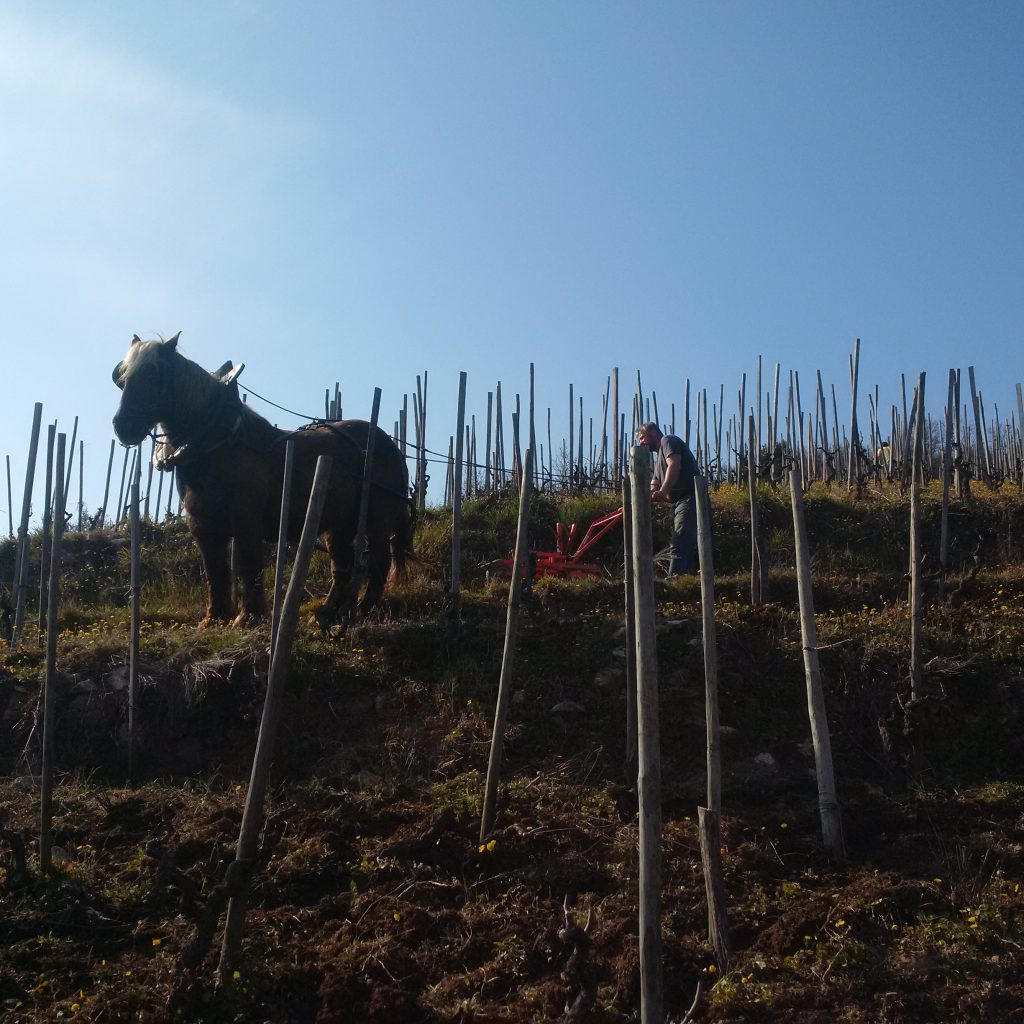
The elusive Francoise Ribo on top of a parcel of St-Joseph they were ploughing by horse. On a day like this, it looked magical. Dard & Ribo have a reputation as being difficult to find. Indeed, we spent the preceding 20 minutes wandering up the hillside shouting their names.

A bottle of St-Joseph Blanc, bread and rilettes. Lunch.

Slow work, but wonderful for the soil. Not a cheap way of working. As well as using the horse, they use the winch system of ploughing. Inspiring stuff.

2008 Clape in great form in the evening. Love this vintage when done well.

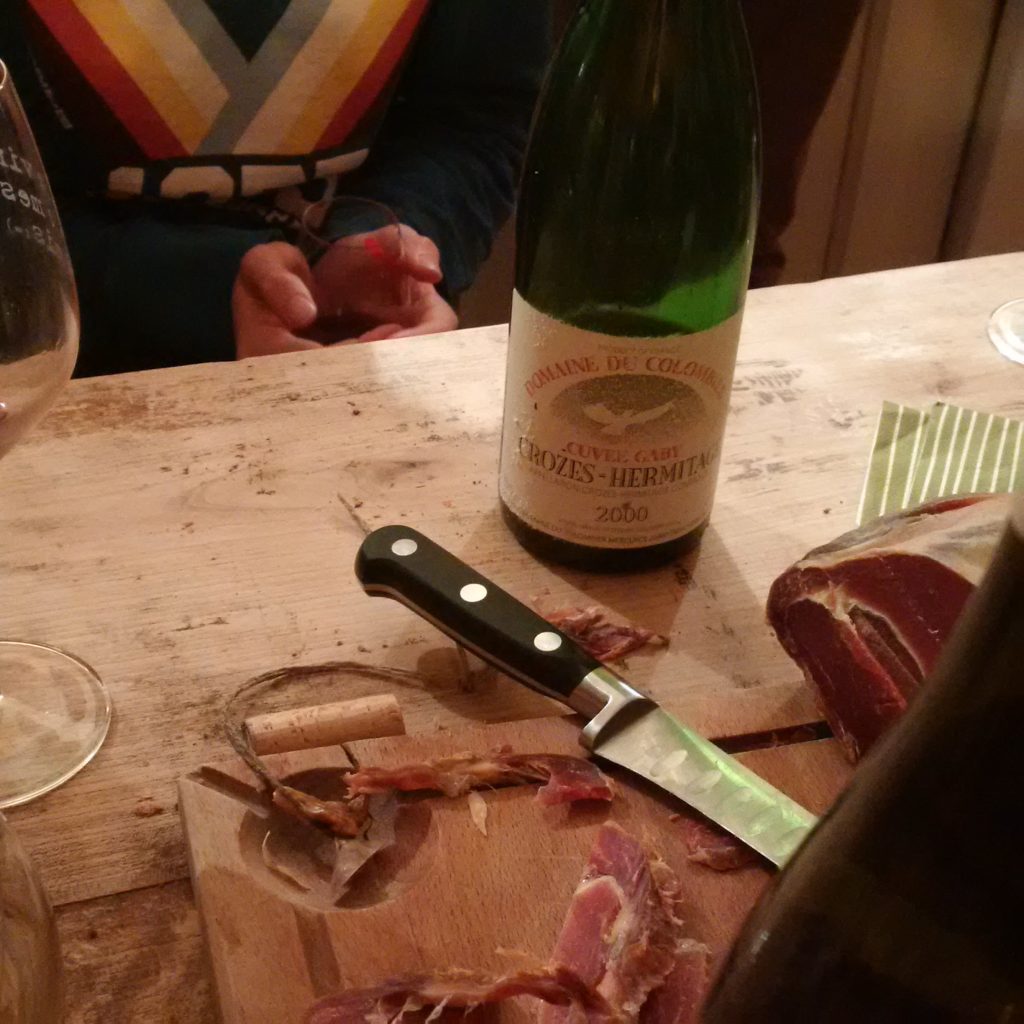
2000 Crozes-Hermitage Gaby. Hermitage quality and perfect now. Nicely developed Syrah character.

Joe GilmourSnaps from the Northern Rhone