Like my dad, Guy Breton used to deliver gas cannisters. An honourable job, no doubt, but one that is not going to sustain some for the long-haul.
So a decision was made around 1986. He was going to take over his grandfather’s family vines. He was going to make wine.
Like all the best decisions, the happy gods of good timing smiled, and he was led, tutored and poured wines by Jacques Neauport and Marcel Lapierre. The Pied-Pipers who led so many of this generation away from the sweetly whispered promises of industrial vinification.
He didn’t listen to them. He joined some like-minded winemakers who wanted to explore this way of making wine. With Marcel Lapierre, Jean Foillard, Jean-Paul Thevenet he had found friends and allies.
The gang worked hard on their wines. Jacques Neauport, a partisan and winemaking consultant to the group, known popularly as Bidasse, rather mischievously told a Le Figaro reporter that while the industrious gang were busy in their cellars, analyzing samples under and checking the development of their wines, the rest of Villie-Morgon was sitting on its collective arse watching game shows on television.
But, my god, I’m myself lying on a bed writing this now, and realise it is somewhat easy to throw shade on a post-war generation of Beaujolais producers, addicted to herbicides, pesticides and artificial yeasts, but that was the way. It wasn’t as if everyone accepted the trade off between quality and industrial farming. They were told they could have it all. A zeitgeist that said through science lay perfection and perfectibility. Happiness for all.
 Additionally, for the prices paid for Beaujolais, for many it was the only way to survive. Making great wines with natural viticulture is great, sure, but feeding your family is better.
Even with work in the vineyards perhaps taking twice as much time, volumes smaller, and vinification more risky, this group didn’t recoup significantly more for their wines. The economics weren’t brilliant and it must have taken years before they were secure in this way of working.
With Petit Max though, the gang had found a kindred spirit, who you sense, more than any philosophy, just loved the way these wines tasted. Silky, light and so beautiful to drink you finish a bottle before you’ve pulled the cork. They were all winemakers for sure, but they were also drinking friends where the consumption at parties is measured not in bottles but hectolitres. Now, whilst the domaines of Foillard and Lapierre have increased to around 30 hectares, Guy’s has stayed small, only about 4 hectares in total.
I stopped briefly a few weeks ago to see how Guy was getting on with the 16s and 17s, and found him in great form.
After going through the current releases, which are all terrific in their respective styles, and revisiting the 15s a bit, which I think were a great success for him. He opened a blind bottle, which was clearly very old and I guessed towards 1990, but it was the 1989, one of his very first vintages. Judging from the blogosphere, it seems he’s opened a few bottles of this recently. I liked it very much and like all great old Beaujolais it had a very strong sense of Pinosite, but I think perhaps the reason he’s opening a few is he knows it’s probably on the downward path. This wine was bottled without any sulphur, a concept that is, I believe much more Neauportian than Chauvertian, who as a negoce was much more ambivalent about the use of sulphur.
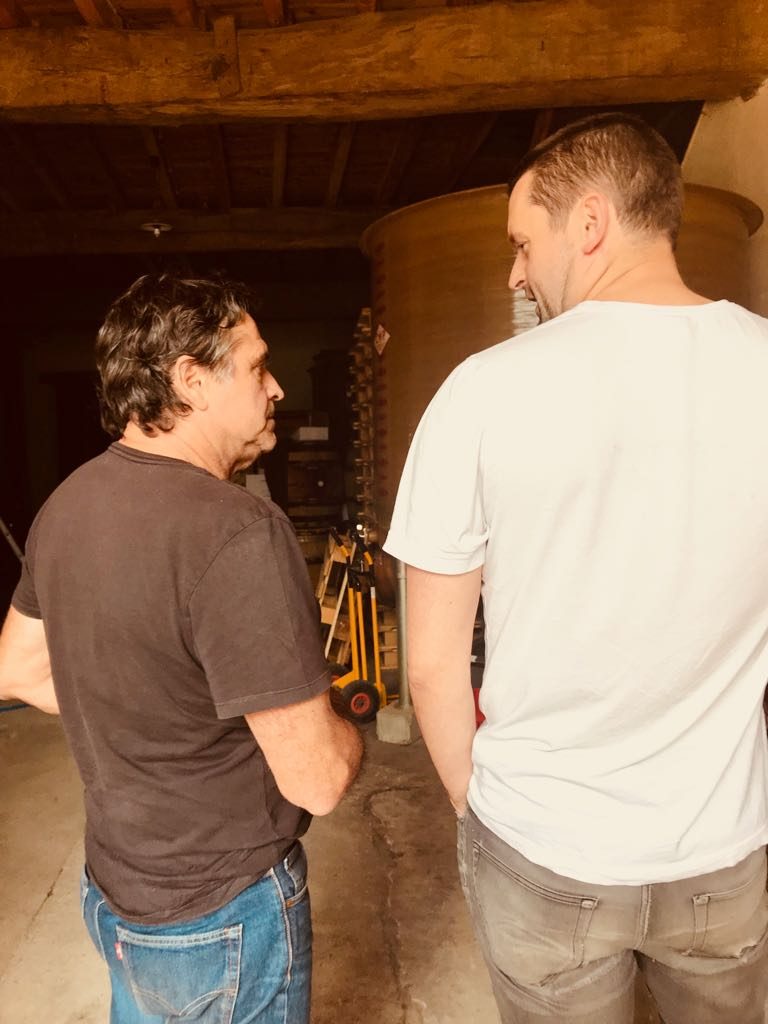
As the morning progressed and I began gulping down Gamay like it was water, he talked about his admiration for the young vignerons, Thillardon and Cotton, his love of the new generation of Lyonnaise restaurants and the future of the region.
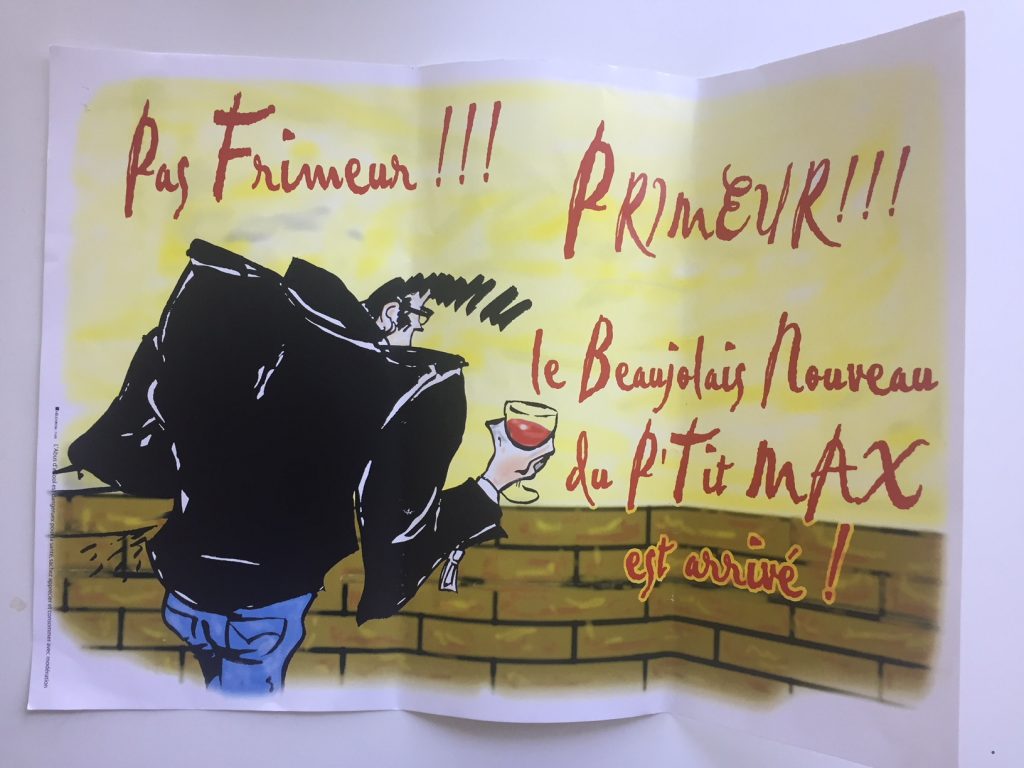
I think I can begin to get a sense of this pride at what he has created over the last twenty years. Not a boastful pride, but the quiet sense of satisfaction for the results that his hard work has generated. He is not a showman, not a show-off (Frimeur), and you sense that these are characteristics he greatly disdains. Primeur – Pas de Frimeur!
 I believe and I hope that in years to come, the relationship between the two Jamet brothers will be rather like that of Pascal and Francoise Cotat – wines that are a bit different in character but generally considered at the same quality level.